On 11 November 2026, the call for a general strike in Spain brings together two problems shaping millions of lives: wages and housing. Working without being able to afford a home exposes a contradiction that the organising unions have placed at the heart of the strike. CNT’s strike announcement.
Behind a strike lies far more than a day away from work: assemblies, conversations, strike funds and generations of learning how to turn shared problems into collective action.
From one factory to a class
Capitalism needs work to continue. Those who depend on selling their labour power to survive also possess, when organised, the capacity to interrupt production and the circulation of goods.
A general strike extends that strength across workplaces and sectors. A demand breaks out of a single workplace and finds allies among people facing similar conditions.
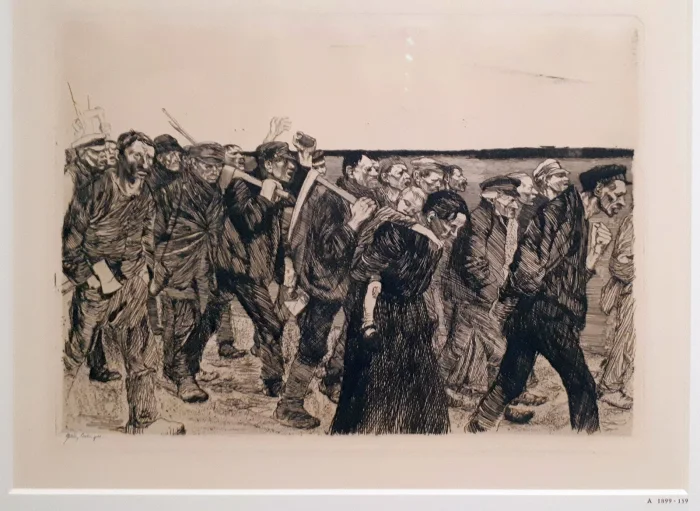
In 1842, a great wave of strikes swept through Britain’s industrial districts. Resistance to wage cuts intersected with Chartism’s demand for broader political representation. Economic exploitation and exclusion from power were intertwined. Historical study by T. D. W. Reid and Naomi Reid.
Russia, 1905: what Rosa Luxemburg understood
The Russian Revolution of 1905 revealed how far that process could go. Disputes over wages and working hours became intertwined with the struggle against tsarist autocracy. Strikes spread between cities and sectors, while bodies of elected workers’ delegates emerged: the soviets.
Workers accustomed to receiving orders were beginning to organise their own political intervention.
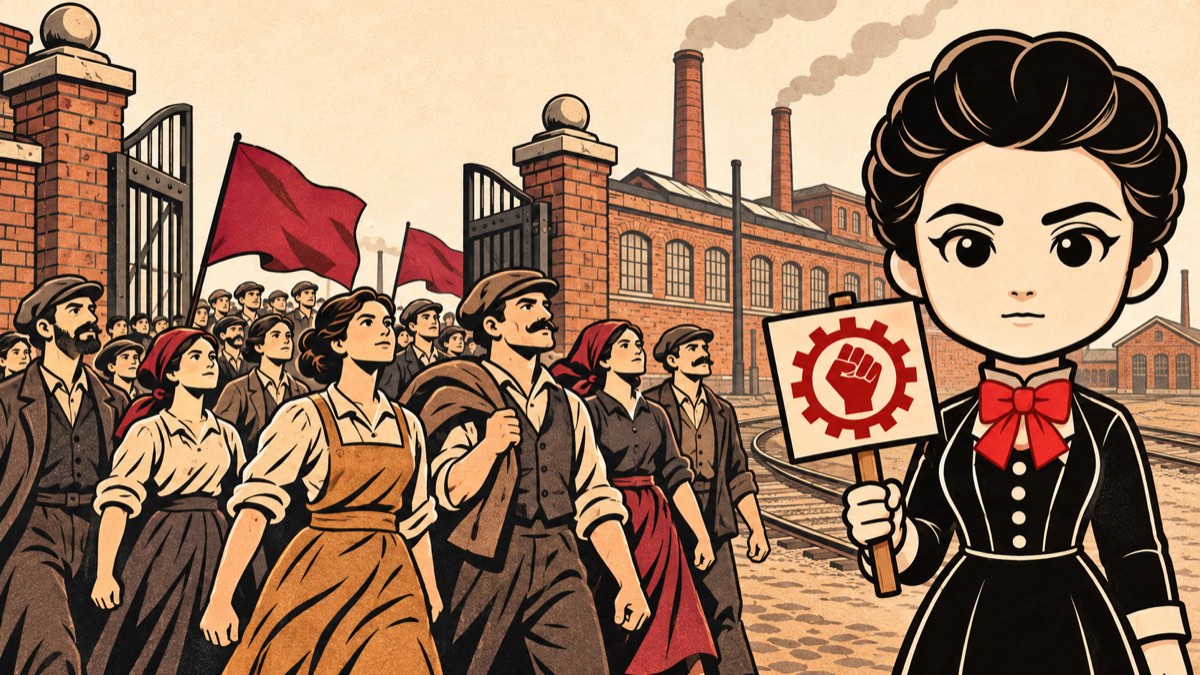
Rosa Luxemburg examined this experience in The Mass Strike, the Political Party and the Trade Unions, published in 1906. She explained how economic and political struggles could reinforce each other: demands for better conditions raised questions about who governed and whose interests they served.
She also understood that mobilisation could create organisation. People previously distant from trade union activity gained experience, confidence and the ability to act together. Trade union and political organisation had to connect those experiences and turn them into sustained strength. Luxemburg, chapter III and chapter VI.
The mass strike was also a practical school of class consciousness.
Barcelona, 1919: winning time to live
The La Canadiense strike began at an electricity company and spread through workers’ solidarity and CNT organisation. Connections between economic activities enabled an initially local dispute to expand.
The mobilisation was decisive in advancing Spain’s legal maximum eight-hour working day, established by decree in April 1919. Its consequences reached workers throughout the country. History of the La Canadiense strike.
Shorter hours meant reclaiming time from compulsory work: time to rest, learn, organise, care and share life with others.
The eight-hour day reminds us that many conditions now considered normal were the objectives of prolonged struggles. Legal recognition followed the building of collective strength to demand them.
France, 1936: occupying factories, winning rest
Following the Popular Front’s electoral victory, a wave of strikes and occupations swept France in May and June 1936.
Workers stayed in their workplaces, held assemblies and sustained the mobilisation. Occupied factories became spaces of solidarity.
Workers’ pressure was fundamental to that summer’s gains. The Matignon agreements secured wage improvements and collective rights; subsequent legislation established the forty-hour week and two weeks of paid holiday. History of the 1936 strikes.
Paid rest expanded what the working class could claim for its existence: living should include more than recovering the strength to produce again.
A history that continues
In France, May 1968 brought student rebellion together with an enormous workers’ mobilisation. Strikes and occupations were linked to major wage increases and advances in workplace trade union organisation. Trade union history of May 1968.
In Spain, the strike of 14 December 1988, led by CCOO and UGT against Felipe González’s government’s economic policies, stopped a Youth Employment Plan that the unions opposed for making employment more precarious. History of CCOO.
Beyond Europe, India’s nationwide strike on 26 November 2020 connected trade union mobilisation with farmers’ protests against labour and agricultural reforms. Solidarity again brought different sectors together around interconnected problems. IndustriALL Global Union.
Wages, housing and collective strength
Stopping work has a cost for people who depend on their wages. Strike funds, informational picket lines and support networks help sustain a decision that is much harder to face alone.
The 11 November strike call again shows how working conditions and housing shape the same lives: gains in wages can disappear into rent.
Remembering general strikes helps us understand where our rights came from and what defending them requires. Society functions thanks to those who produce, transport, teach, clean, repair and care.
When those who keep everything moving learn to act together, they can also change the course of history.
Continue exploring at WeTheComuna through the struggle for the eight-hour day, May 1968 and the gains and setbacks in workers’ rights.