The baton has a direction
The phrase “law and order” contains a question that is rarely asked: what order is being maintained, and who benefits?
In a capitalist society, property, wealth and decision-making power are distributed profoundly unequally. When those relations encounter resistance, the state has armed bodies at its disposal to enforce its decisions. The police occupy a central place in that structure: they make an authority that appears impersonal on paper physically enforceable.
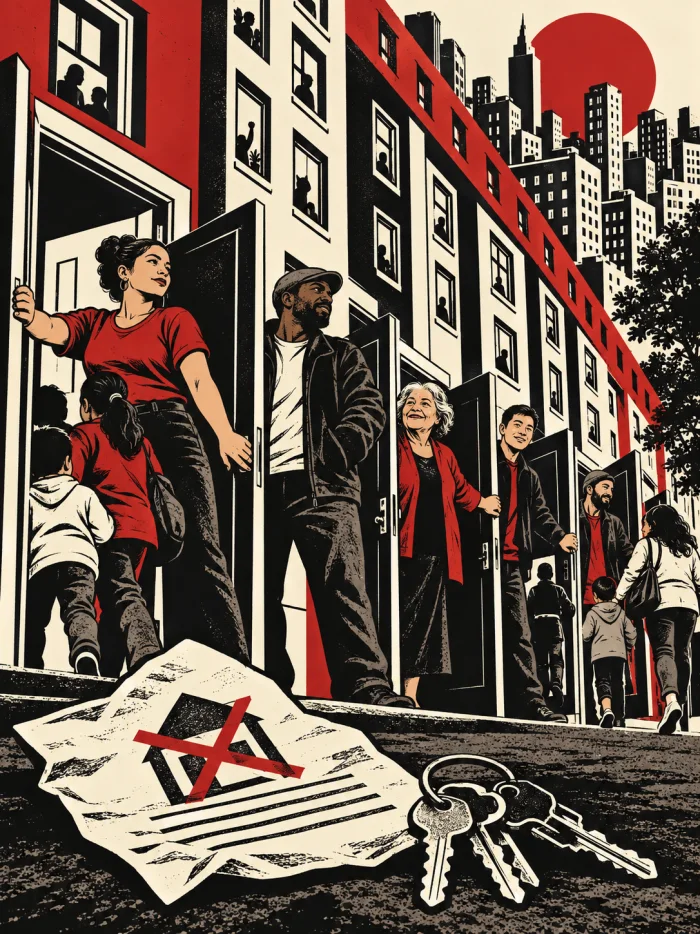
During an eviction, that abstraction takes concrete form. Officers clear a path, remove those trying to prevent it and ensure that the property is handed over. An order can be lawful while its enforcement still produces an injustice. Legality explains which procedure applies; on its own, it does not establish that the outcome is just.
Public force can thus serve a very particular kind of security: that of the owner recovering a property, while a family loses the security of having a roof over their heads.
When working is compulsory and stopping becomes dangerous
A strike interrupts the normality that sustains business profits. It makes visible that factories, transport and services function because someone works.
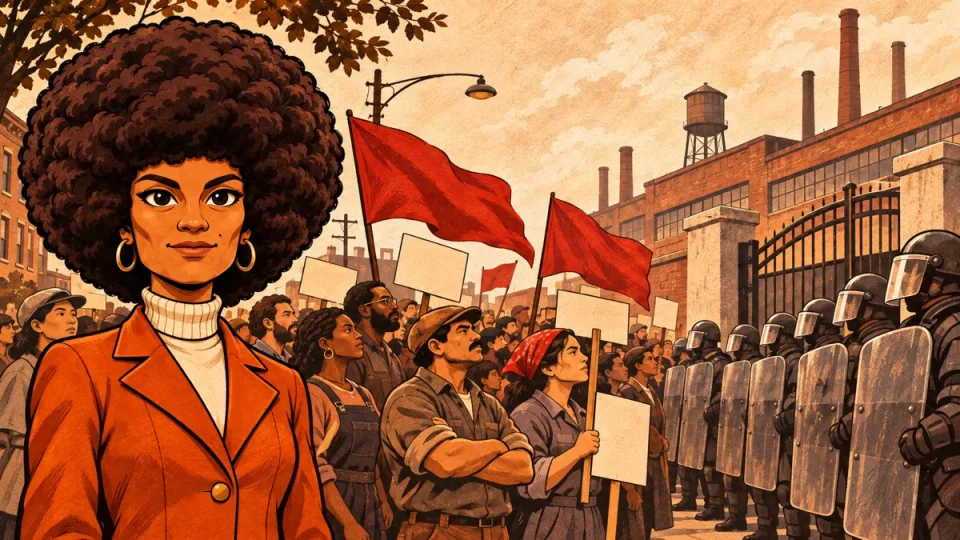
That is why a picket line matters beyond its size: it turns individual decisions into collective strength. Clearing it can allow production to continue and weaken the bargaining power of those on strike.
The International Labour Organization itself recognises the legitimacy of peaceful picketing and warns against arrests for organising or participating in peaceful strikes. The need to reiterate those safeguards reveals how readily a labour dispute can become a policing matter. ILO: freedom of association and the right to strike.
Police intervention changes the terms of the conflict. The company retains its financial resources; protesters face, alongside lost wages, the risk of identity checks, fines, detention or injury. That imbalance also disciplines those who have not yet joined.
Repression also means manufacturing fear
A police charge ends in minutes. Its consequences can last for years.
The fear of losing an eye, facing court proceedings or returning home with a fine can keep someone away from the next mobilisation. Repression also reaches those who witness what happens and learn how costly participation can be.
France provides documented examples. During the 2018 protests, Amnesty International denounced excessive force against largely peaceful demonstrators, including impact projectiles and grenades. The injuries contradict the reassuring image attached to so-called “less-lethal” weapons. Amnesty International’s investigation.
In 2020, the organisation also documented how French authorities used vaguely worded laws to fine, arrest and prosecute people who had committed no violent acts. Criminalisation can operate even when there is no baton in the picture. Arrested for protest.
From the right to protest to the duty to justify yourself
Then comes the struggle over how events are told.
A mobilisation can bring together the demands, organisation and experiences of thousands of people. If its representation is reduced to a few seconds of confrontation, the cause disappears behind the incident.
We should examine who is required to explain themselves. A movement is asked to answer for any damage occurring around it. Police action, meanwhile, can be presented as an inevitable response, even before anyone investigates who ordered a charge or how weapons were used.
That framing turns a social conflict into a question of obedience. Questions about wages, housing or public services recede. Those demanding rights end up having to prove that they deserve to be heard.
Angela Davis: thinking beyond punishment
Angela Davis’s critique connects policing, racism, prisons and social inequality. Her abolitionist perspective invites us to build different conditions of safety. Angela Davis on abolition.
That horizon demands a discussion about which needs receive resources and which receive surveillance. A society that responds to poverty with punishment and to conflict with police deployments protects its hierarchies while leaving the causes of insecurity intact.
A class analysis makes that institutional function understandable without requiring every intervention to follow a direct phone call from an employer. The defence of existing relations is built into laws, priorities and chains of command.
Our rights cannot be contained behind a police cordon
Working-class history is full of struggles persecuted before their victories were recognised. The disobedience of those who organised opened possibilities that the prevailing order kept closed.
Defending those gains requires documenting abuses, supporting people facing repression, demanding accountability and strengthening collective organisation.
A protest that causes discomfort may be exposing precisely what those in power need to keep beyond discussion.
Before accepting that the police are “restoring normality”, we should look at what is being restored: who commands again, who generates profits again, and who is silenced again.